
How to choose between embroidery and print
The best branding method isn’t the most expensive one.
It’s the one that’s right for the job.
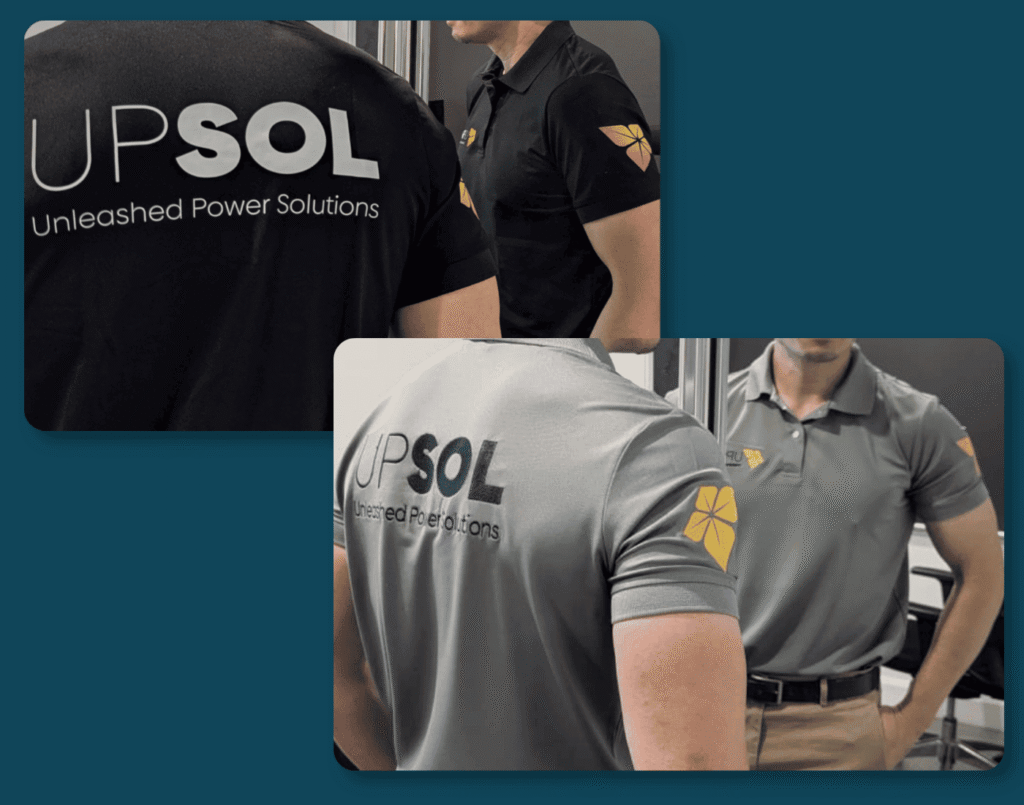
One of the first questions customers ask is whether they should choose embroidery or print.
The honest answer?
Neither is “better.”
They’re simply designed to do different things.
Some suppliers will tell you embroidery is the premium option because it costs more. Others will push print because it’s cheaper and faster. Neither answer is particularly helpful if you’re trying to decide what’s right for your business.
The better question is this:
Where will the garment be worn, and what impression do you want it to leave?
Embroidery creates texture. It has depth, catches the light, and gives a garment a more traditional, corporate feel. That’s why it’s commonly used by accountants, real estate agencies, hospitality venues and businesses where uniforms are worn every day for years.
A well-embroidered logo doesn’t try to stand out. It simply looks like it belongs.
Print, on the other hand, offers flexibility.
It allows for fine details, gradients, larger artwork and vibrant colours that embroidery simply can’t reproduce. If your logo includes intricate lines, multiple colours or photographic elements, print will almost always produce a cleaner result.
It’s also the better choice for large back prints, promotional events, sports teams and businesses that want bold branding rather than subtle branding.
One misconception we hear all the time is that embroidery lasts longer.
That’s not necessarily true.
Modern printing methods have come a long way. When applied correctly to quality garments, a professionally printed logo can remain sharp and vibrant through years of regular washing. Likewise, poor-quality embroidery can pull, pucker or distort the fabric if it’s not done properly.
The quality of the garment and the application matter far more than whether it’s stitched or printed.
There’s also the question of comfort.
Large embroidered designs can feel heavier because of the stitching and backing on the inside of the garment. For a small chest logo, you’ll barely notice it. For larger designs, print is usually the more comfortable option.
Cost is another consideration, but it shouldn’t be the deciding factor.
Embroidery generally costs a little more because every stitch has to be physically sewn into the garment. Print is often more economical, particularly for larger designs or multi-colour logos.
That doesn’t mean one offers better value than the other.
It simply means you’re paying for different outcomes.
When customers ask us which method they should choose, we usually don’t start by talking about embroidery or print.
We ask about their business.
Are the uniforms worn every day?
Will staff be working outdoors?
Is the logo simple or detailed?
Do they want a polished corporate look, or something more modern and eye-catching?
Those answers almost always make the decision for you.
At the end of the day, the goal isn’t to choose the “premium” option.
The goal is to choose the option that represents your business well, fits your budget and gives your team something they’re proud to wear.
Sometimes that’s embroidery.
Sometimes it’s print.
And sometimes it’s a combination of both.
The best branding decisions are rarely about following trends.
They’re about choosing what works.