
Why does heat transfer look backwards?
It looks wrong. Until it isn’t.
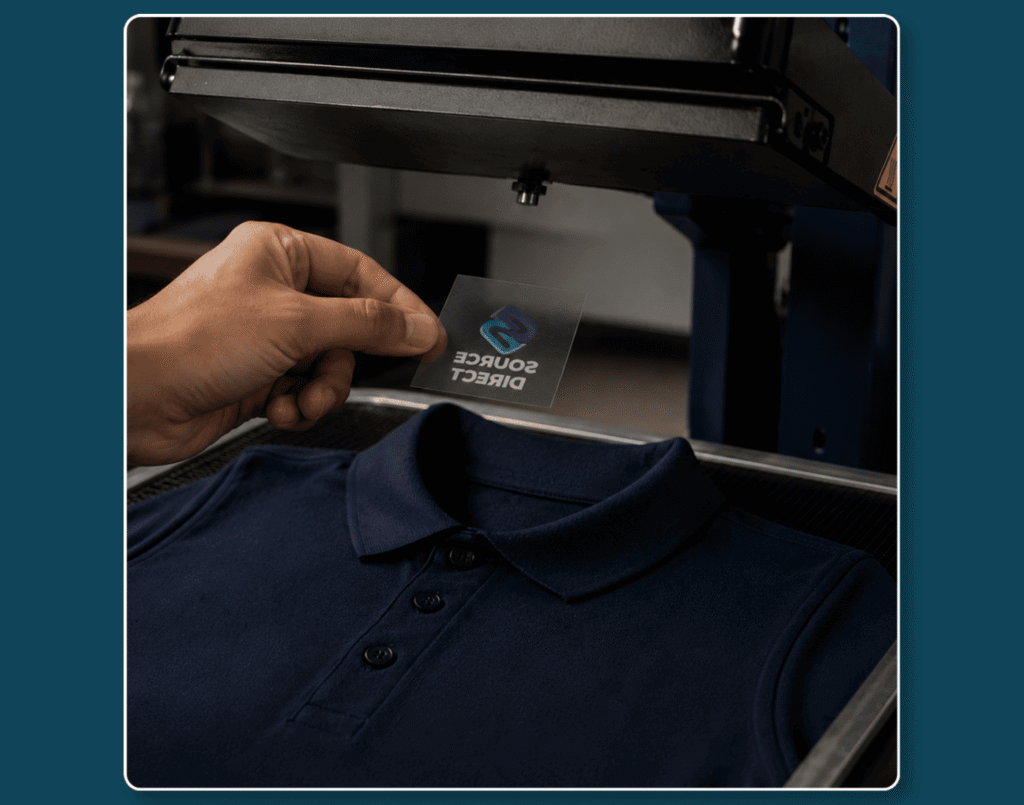
If you’ve ever seen a heat transfer before it’s been applied to a garment, you may have noticed something strange: the design looks backwards.
The text is reversed. Logos look wrong. Anything directional appears to be facing the opposite way.
And that’s exactly how it’s supposed to look.
The design has to be reversed. Heat transfer artwork is typically mirrored before it is produced.
The transfer itself is made with the design facing the wrong way because it needs to be pressed onto the garment and transferred onto the fabric.
When it’s applied, the image effectively flips back around.
The result? The design on the finished garment appears exactly as it was originally intended. It’s a little like looking at something in a mirror, what looks backwards from one side makes perfect sense when you see the finished result.
Why does it need to be reversed?
Because the transfer isn’t being printed directly onto the garment.
The artwork is first transferred onto a carrier material. That material is then positioned onto the garment, and heat and pressure are used to bond the design to the fabric. If the artwork wasn’t mirrored beforehand, the finished result would actually be backwards.
Imagine putting a name on the back of a shirt and discovering afterwards that everyone has to read it in a mirror. Not ideal.
So when you see it backwards… Don’t panic.
If you’re looking at a heat transfer before it’s been pressed, backwards is correct.
It’s one of those small details in apparel production that makes absolutely no sense until you understand what’s happening. Then it makes perfect sense.
And that’s part of what makes garment decoration interesting. What looks like a mistake can actually be a deliberate part of the process.
A small detail. A very clever process.